About the project
Date
Client
O Povo Ainda Ordena
(The People Still Command) – Photography Book
Overview
O Povo Ainda Ordena was a project developed during my final year of college for the Applied Photography and Post-production course. In a team of three, we created a book focused on the 1974 Portuguese Revolution, which led to the end of Salazar’s dictatorial regime. My primary contributions to the project included graphic design, web design, editing some of the photographs, and conceptual design.
Project Concept
We chose the 1974 Portuguese Revolution as our theme, known as the Carnation Revolution, which marked a social and economic rebirth for Portugal. The theme became even more relevant in 2024, as it would be the 50th anniversary of the revolution. Due to its significance to the Portuguese people, many publications address the revolution in an informative and celebratory manner.
However, we didn’t just want to celebrate — we wanted to ignite a new revolution. We aimed to show that a revolution in a single day doesn’t guarantee the people’s victory forever. The people’s voice can sometimes be silenced or distracted by the system, but we wanted to remind everyone that, indeed, O Povo Ainda Ordena (The People Still Command).
To achieve this goal, we created conceptual studio and outdoor photos addressing themes such as education, healthcare, minority discrimination, and ethnic discrimination in a critical and responsible way. Our critique is directed at the achievements still needed in the country, serving as a wake-up call for people to realize that the voice remains theirs — it always will — as long as they are aware of this and continue to promote change through revolution.
Produced Materials
- Digital version of the book
- Printed version of the book
- Book mockup for concept presentation
- Postcard for the printed version
- 43 photographs
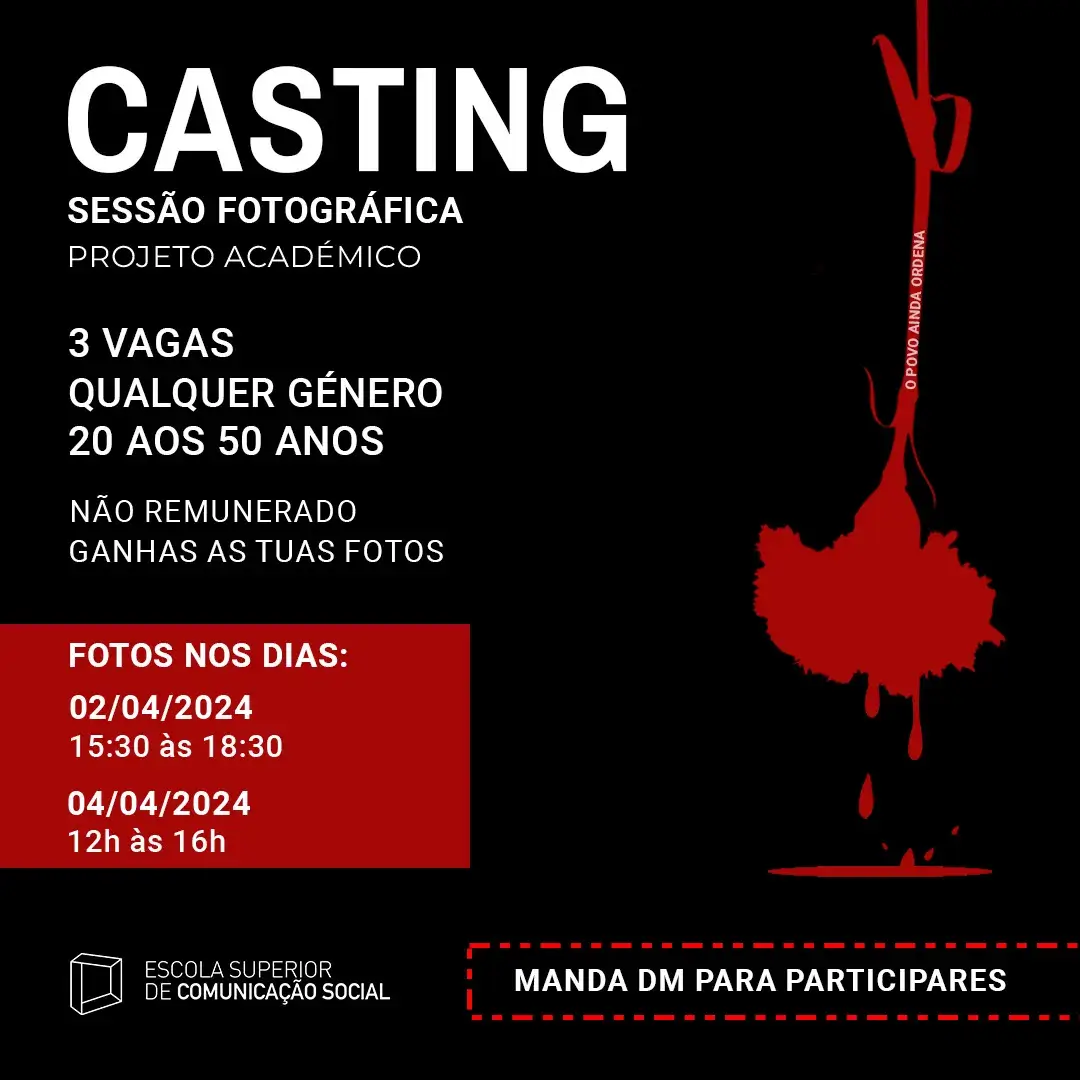
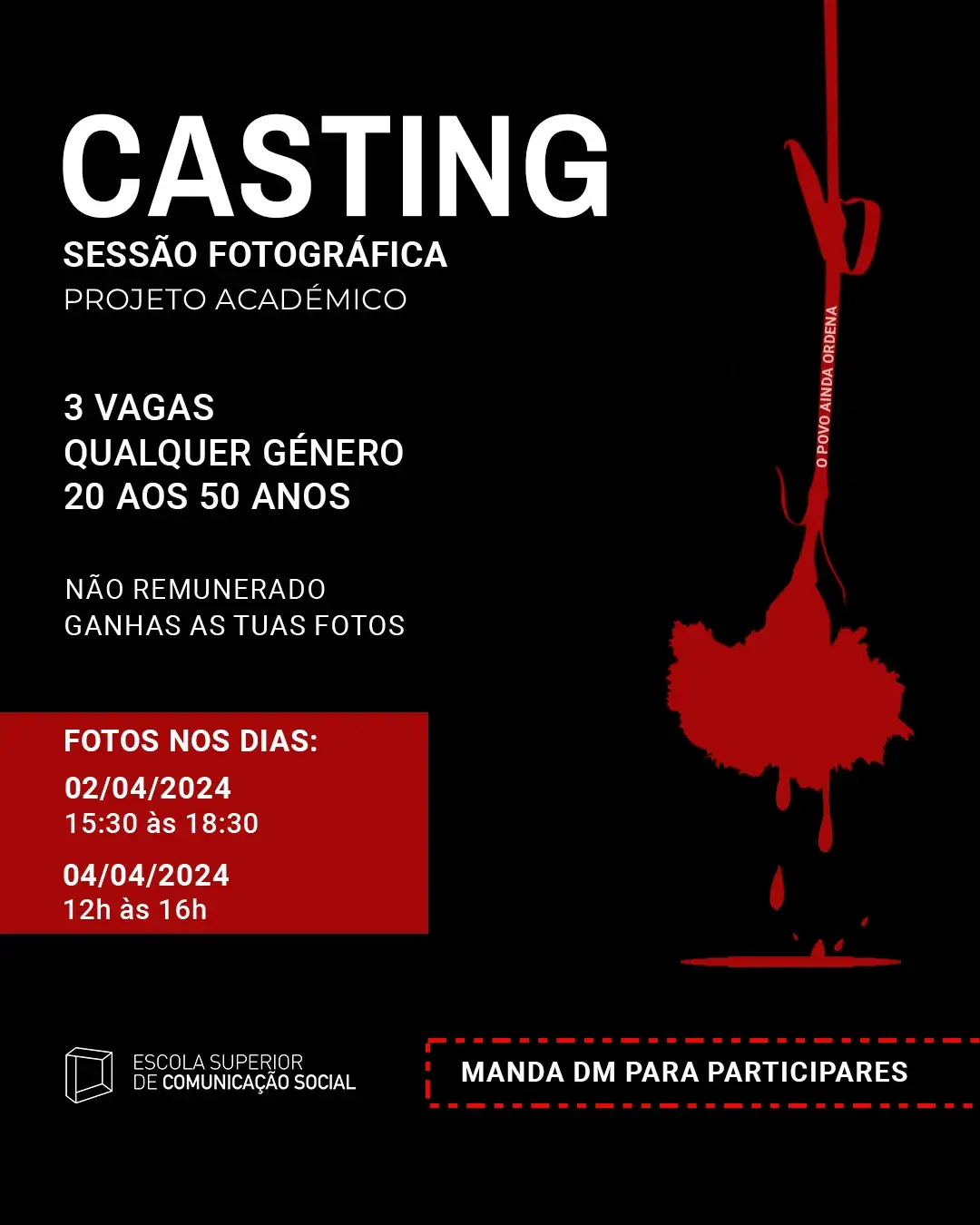
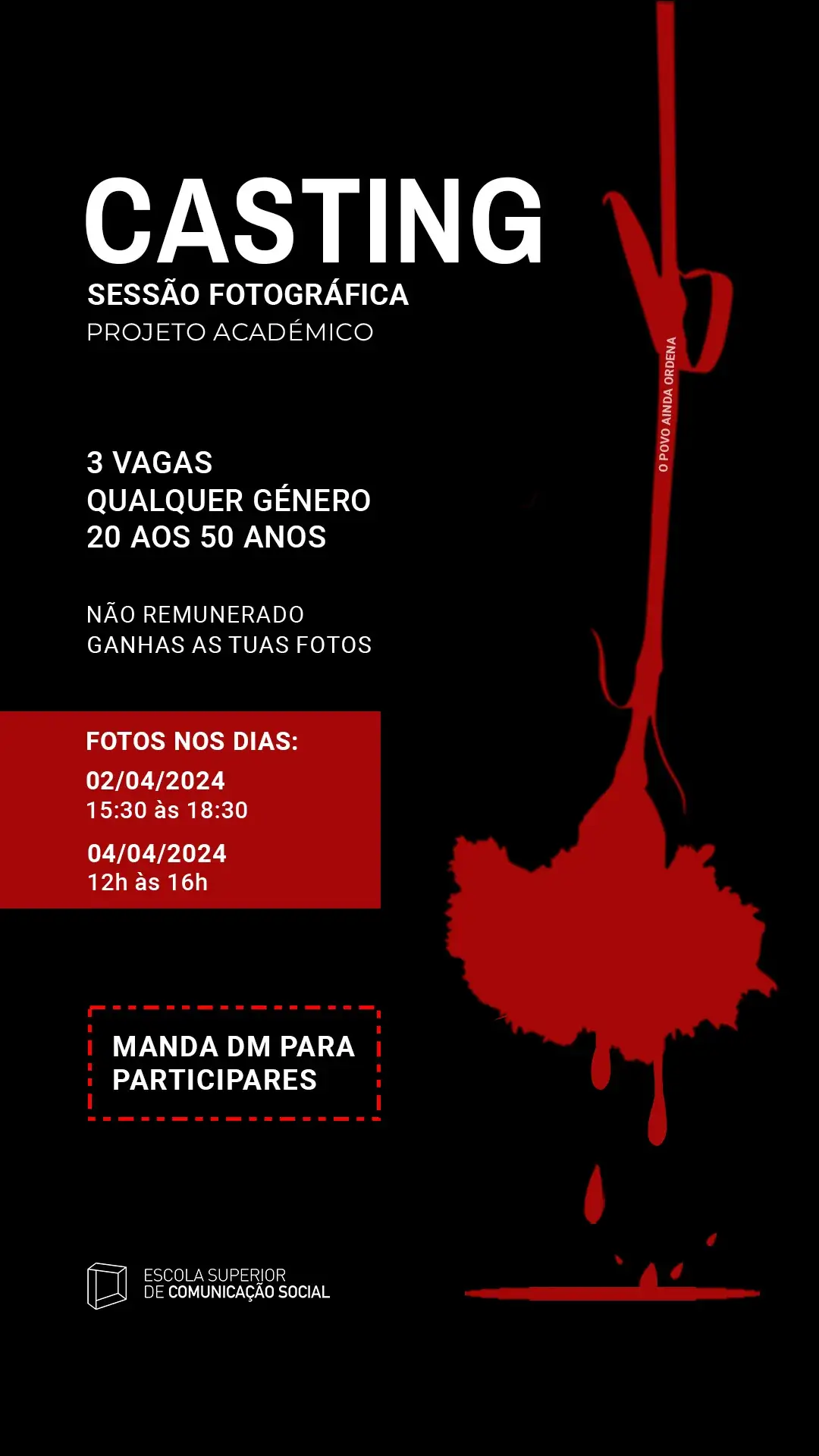
- Social media post for casting
- Website
Book
The book features a custom layout tailored to each text and subject. The design encourages active engagement from the viewer, allowing them to interpret the texts alongside the photographs, as well as through the page design and the arrangement of elements.
Active participation is further prompted by elements such as cutouts that reveal subliminal messages. The call for revolution is embodied at the end of the book, with a QR code directing the reader to the book’s website and a hidden postcard tucked away in a secret compartment.
Technical Information
- Genre: Photography Book
- Theme: Revolution
- Pages: 84
- Size: 20cm x 20cm
- Original photographs: 43
- Original poems: 17
- Authors: Pâmella Santos, Mariana Garrido, and Henrique Poucochinho
- My main contributions to the project: Graphic design, web design, photo editing, and conceptual photography design
Website
The book’s website was created as a landing page with the purpose of providing information about the project, such as its concept and the authors, and showcasing some behind-the-scenes moments from the creative process. Additionally, the landing page includes a brief preview of the book and a contact form.

Social media graphics